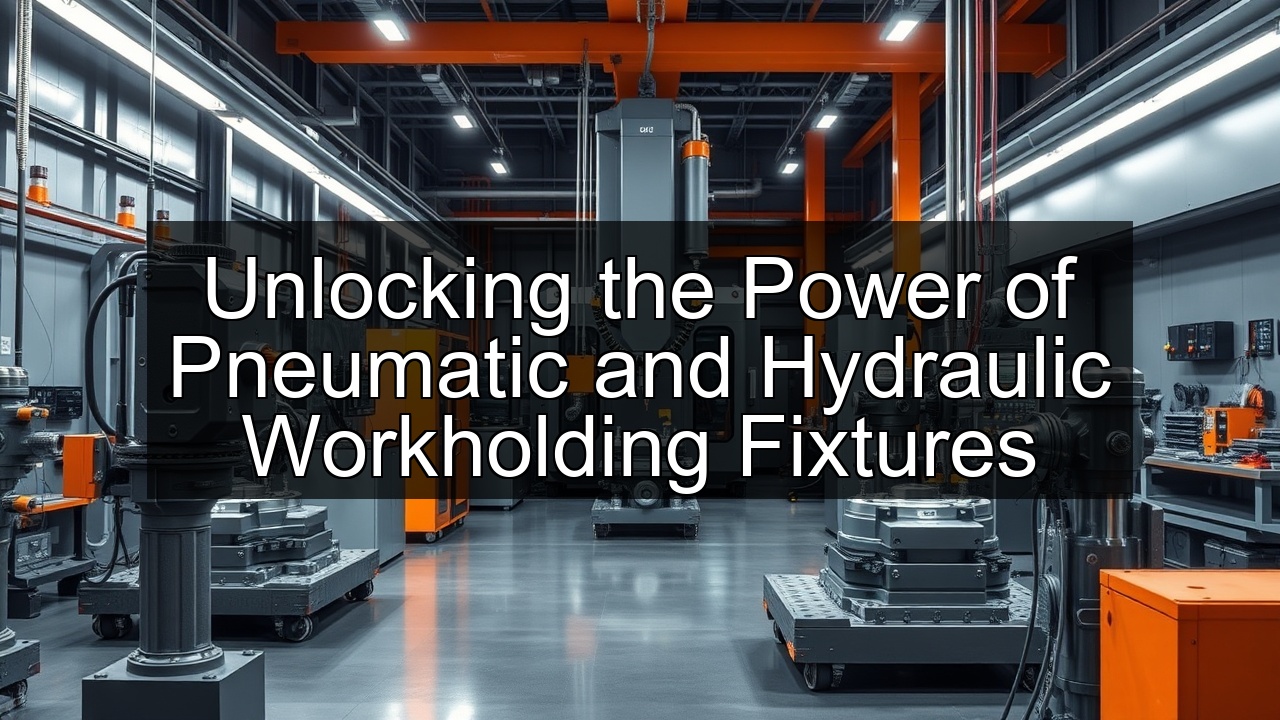
Unlocking the Power of Pneumatic and Hydraulic Workholding Fixtures
Understanding Custom Workholding Fixtures
The Importance of Customization in Manufacturing
Custom workholding fixtures play a pivotal role in modern manufacturing, especially in CNC machining. These fixtures enhance efficiency by securely holding workpieces in place during machining operations, which significantly reduces the risk of errors. Customization allows manufacturers to tailor fixtures to specific components, ensuring optimal fit and function. This tailored approach minimizes tooling changes and setup times, leading to increased throughput. By investing in bespoke workholding solutions, manufacturers can achieve higher precision and consistency in their production processes, ultimately driving down costs and improving product quality.
Types of Workholding Fixtures: Pneumatic vs. Hydraulic
Pneumatic and hydraulic workholding fixtures represent two distinct yet powerful technologies in the realm of custom fixture manufacturing. Pneumatic fixtures utilize compressed air to create clamping force, offering rapid actuation and lightweight designs. These fixtures excel in applications requiring quick setup and frequent part changes. Conversely, hydraulic fixtures leverage fluid pressure to generate greater clamping force, making them ideal for heavier workpieces and high-torque applications. Understanding the differences between these systems enables machinists and engineers to select the most suitable solution for their specific machining needs, enhancing both performance and safety in operations.
Applications of Custom Workholding in CNC Machining
Custom workholding fixtures find extensive applications in CNC machining, where precision and efficiency are paramount. These fixtures accommodate various processes, including milling, turning, and drilling. For instance, in milling operations, custom fixtures designed with toggle clamps or cam locks can securely hold a workpiece in place, allowing for intricate machining without movement. In addition, custom tooling solutions facilitate quick changes for different workpieces, optimizing the machining workflow. Industries such as automotive, aerospace, and medical device manufacturing benefit significantly from tailored workholding solutions, as they enhance productivity while maintaining the necessary quality standards.
Innovations in Workholding Technologies
Advancements in Pneumatic and Hydraulic Systems
Recent innovations in pneumatic and hydraulic systems have revolutionized the design and functionality of custom workholding fixtures. Modern pneumatic systems offer enhanced sensor integration, allowing for real-time monitoring of clamping force and fixture status. This innovation not only improves safety but also ensures consistent performance across production runs. Hydraulic systems have also evolved, with advancements in materials and sealing technology that reduce maintenance needs while maximizing clamping effectiveness. These improvements translate to better quality control, as manufacturers can rely on the stability and repeatability of their custom fixtures during high-volume production.
The Role of Automation in Workholding Efficiency
Factory automation has become integral to enhancing the efficiency of custom workholding solutions. Automated systems can incorporate robotic arms equipped with grippers designed for specific workpieces, streamlining the loading and unloading process. This automation minimizes human error and reduces cycle times, allowing for continuous operation. Advanced software also plays a role in optimizing fixture design, enabling quick adjustments based on real-time data. The integration of automation with custom workholding fixtures not only improves production rates but also aligns with the industry trend towards smart manufacturing, where custom tool fixtures data-driven decisions enhance overall operational efficiency.
Integrating Robotics with Custom Fixtures
The integration of robotics into custom workholding designs represents a significant leap forward in manufacturing capabilities. Robotic systems equipped with customized grippers can adapt to various workpiece shapes and sizes, allowing for flexible workholding solutions. Robots can easily replace traditional fixtures, providing a more dynamic approach to machining setups. This flexibility enables manufacturers to switch between different products with minimal downtime. Moreover, the combination of robotics and custom workholding fixtures enhances precision and repeatability, essential for high-stakes industries like aerospace and medical device manufacturing, where tolerances are critical.
Design and Engineering Considerations
Design for Manufacturing: Best Practices
Effective design for manufacturing (DFM) significantly impacts the success of custom workholding fixtures. Best practices in DFM focus on simplifying the fabrication process while ensuring functionality. Engineers must consider factors such as ease of assembly, material selection, and compatibility with existing machinery. Utilizing modular designs can facilitate rapid adjustments and repairs, reducing lead times. Additionally, incorporating features like quick-release latches or toggle clamps can enhance usability and flexibility. By integrating DFM principles into the design phase, manufacturers can create efficient and effective workholding solutions that meet the demands of modern machining environments.
Material Selection: Steel vs. Aluminum in Fixtures
Choosing the right material for custom workholding fixtures is crucial for performance and longevity. Steel, known for its strength and durability, is often the preferred choice for heavy-duty applications requiring high torque and stability. Its rigidity ensures precise machining, making it ideal for high-volume production. On the other hand, aluminum offers lighter weight and corrosion resistance, making it suitable for applications where weight savings are critical. Engineers must weigh the benefits and drawbacks of each material, considering factors such as the specific machining process, the type of workpiece, and the required fixture longevity.
Quality Control and Testing for Workholding Systems
Quality control remains a cornerstone of effective custom workholding systems. Rigorous testing protocols ensure that fixtures perform reliably under operational conditions. Manufacturers should implement standard metrics for evaluating fixture performance, including clamping force consistency, durability, and precision. Techniques such as non-destructive testing can identify potential weaknesses before fixtures enter production. By prioritizing quality control, manufacturers can prevent costly errors and maintain the integrity of their machining processes. Continuous monitoring and feedback loops further enhance the capabilities of custom workholding designs, ensuring they meet evolving industry standards and customer expectations.
Cost and Value of Custom Workholding Solutions
Pricing Strategies for Custom Fixtures
Developing effective pricing strategies for custom workholding fixtures involves understanding the balance between cost and value. Custom fixtures often require a higher initial investment compared to off-the-shelf solutions. However, their long-term benefits significantly outweigh the upfront costs. Factors influencing pricing include design complexity, material selection, and manufacturing processes involved. Offering tiered pricing based on features and specifications can cater to different customer needs, allowing manufacturers to capture a broader market. Additionally, transparent pricing models that highlight the cost-benefit analysis of custom fixtures can enhance customer trust and encourage investment in tailored solutions.
Evaluating the Return on Investment in Workholding
Evaluating the return on investment (ROI) in custom workholding solutions involves analyzing both tangible and intangible benefits. While the initial costs may be higher, the efficiency gains from reduced cycle times and improved machining accuracy yield significant cost savings over time. Factors such as increased production rates and lower rejection rates contribute to a favorable ROI. Moreover, customized fixtures often custom machining fixtures lead to improved safety and reduced maintenance costs, further enhancing their value. Manufacturers should conduct regular assessments to quantify these benefits, ensuring that their investment in custom workholding continues to deliver optimal results.
Impact of Custom Fixtures on Manufacturing Efficiency
Custom workholding fixtures have a transformative impact on manufacturing efficiency. By providing tailored solutions that fit specific machining requirements, these fixtures minimize setup times and enhance productivity. Machinists can achieve higher precision and consistency, reducing scrap rates and improving overall product quality. Moreover, the integration of automation and advanced materials into custom fixtures further amplifies efficiency gains. As manufacturers adopt innovative workholding designs, they position themselves to remain competitive in an ever-evolving market, where efficiency and quality are paramount. Investing in custom workholding is not merely a choice but a strategic necessity for modern manufacturing success.