Unlocking Quality in Aerospace with AS9100 Certified Machine Shops
Understanding AS9100 Certification
What is AS9100?
AS9100 stands as the premier quality management standard tailored specifically for the aerospace sector. It builds directly on ISO 9001 principles yet adds stringent requirements around safety, risk management, and configuration control. Machine shops pursuing this certification must demonstrate consistent processes that eliminate defects in every component they produce. AS9100 machine shops integrate these rules into daily operations, from initial quoting through final delivery. The standard demands documented evidence of supplier evaluations, process validations, and corrective actions whenever issues arise. As9100 machine shops that earn the designation prove they operate at a level far above general manufacturing. This certification signals to aerospace contractors that the facility maintains rigorous controls over materials, personnel training, and equipment calibration. Companies seeking reliable partners recognize AS9100 as a non-negotiable benchmark for precision work.
Importance of AS9100 in Aerospace
Aerospace machine shops face extreme demands where even minor deviations can compromise flight safety. AS9100 certification enforces a culture of proactive risk assessment that prevents costly failures downstream. It requires machine shops to track every variable that affects part integrity, from raw material lots to operator qualifications. This focus reduces scrap rates and accelerates approval cycles with prime contractors. AS9100 machine shops gain preferred status on bid lists because buyers trust their documented systems. The standard also promotes continuous improvement through internal audits and management reviews. Aerospace programs benefit when every supplier follows identical quality language, which speeds collaboration across global supply chains. Without AS9100, machine shops often encounter repeated audits and delayed payments. Certified facilities instead deliver parts that meet specifications on the first submission, protecting schedules and reputations alike.
Overview of AS9100 Rev D
AS9100 Rev D introduced updated clauses on product safety, counterfeit part prevention, and human factors awareness. Machine shops must now embed these elements into existing procedures rather than treat them as add-ons. The revision aligns more closely with ISO 9001:2015 while retaining aerospace-specific mandates around design validation and operational risk. AS9100 machine shops restructured their quality manuals to address these changes, often investing in new training programs for staff. Rev D places heavier emphasis on leadership accountability, requiring top management to participate in quality planning sessions. Traceability requirements tightened further, demanding records that link every feature back to its manufacturing history. Certified facilities upgraded their document control systems to handle the increased data volume. As a result, AS9100 Rev D machine shops now operate with clearer accountability structures that support both current production and future program expansions.
The Role of AS9100 Certified Machine Shops in Aerospace
Key Benefits of AS9100 Certification for Machine Shops
AS9100 machine shops enjoy streamlined access to major aerospace contracts because primes require the certification upfront. Reduced inspection costs follow once buyers accept the shop’s internal controls. Certified facilities report fewer customer complaints and faster resolution when issues surface. The standard also drives operational efficiency through standardized work instructions that minimize training time for new hires. Machine shops that maintain AS9100 certification attract higher-margin work and build long-term relationships with OEMs. Insurance premiums often drop due to demonstrated risk mitigation practices. Employees gain clearer career paths as the company invests in ongoing competence development. Overall, the certification transforms machine shops from commodity suppliers into strategic partners that contribute directly to program success.
How AS9100 Enhances Quality Control
AS9100 machine shops implement layered inspection protocols that catch deviations before parts leave the facility. First-article inspections combine with in-process checks and final verification to create multiple gates. Statistical process control becomes routine, allowing teams to spot trends and adjust parameters in real time. Nonconforming material receives immediate containment and root-cause analysis under documented procedures. AS9100 certification forces machine shops to validate every new process through capability studies before production begins. Calibration schedules cover all measurement equipment with traceable standards, eliminating guesswork during critical dimensions. Supplier management extends the same rigor outward, ensuring incoming stock meets identical quality thresholds. These practices deliver consistent output that aerospace customers can install without additional screening.
Comparison with Non-Certified Machine Shops
Non-certified machine shops often rely on informal quality checks that vary by operator experience. AS9100 machine shops replace variability with repeatable systems that produce identical results across shifts. Buyers must perform extensive audits on uncertified facilities, adding weeks to qualification timelines. Certified shops pass those evaluations quickly because their records already satisfy aerospace requirements. Scrap and rework rates typically run higher without AS9100 discipline, eroding margins and delivery reliability. Traceability gaps appear frequently in non-certified environments, complicating failure investigations. AS9100 machine shops maintain full material pedigrees that support rapid corrective action. The gap in performance widens as programs demand tighter tolerances and shorter lead times, leaving uncertified shops at a competitive disadvantage.
Essential Practices for AS9100 Certified Machine Shops
Inspection and Verification Processes
AS9100 machine shops structure inspection around risk-based sampling plans that focus resources on critical features. Coordinate measuring machines and optical comparators verify dimensions against ballooned drawings with automated reporting. Operators perform in-process verification at defined intervals, recording results directly into the quality system. Final inspection includes functional testing where applicable and visual examination for surface defects. Every rejected part triggers a formal disposition process that documents root cause and preventive measures. AS9100 certification requires evidence that inspection equipment remains capable throughout its calibration cycle. Machine shops schedule periodic gage repeatability studies to confirm measurement uncertainty stays within acceptable limits. These layered checks protect both the shop and its aerospace customers from latent defects.
Traceability in Aerospace Manufacturing
Traceability forms the backbone of AS9100 compliance for machine shops. Each raw material heat receives a unique identifier that follows the part through every operation. Shop travelers record machine numbers, operator initials, and inspection stamps at each step. Software systems link these records electronically, allowing full genealogy retrieval within minutes. AS9100 machine shops extend traceability to tooling and fixtures, ensuring replacement parts carry identical process controls. When a customer issues a recall or field issue, certified shops deliver complete histories that accelerate investigations. Traceability also supports counterfeit part prevention by verifying every supplier’s chain of custody. Without robust systems, machine shops risk losing certification during surveillance audits.
Utilizing CNC Machines for Precision Machining
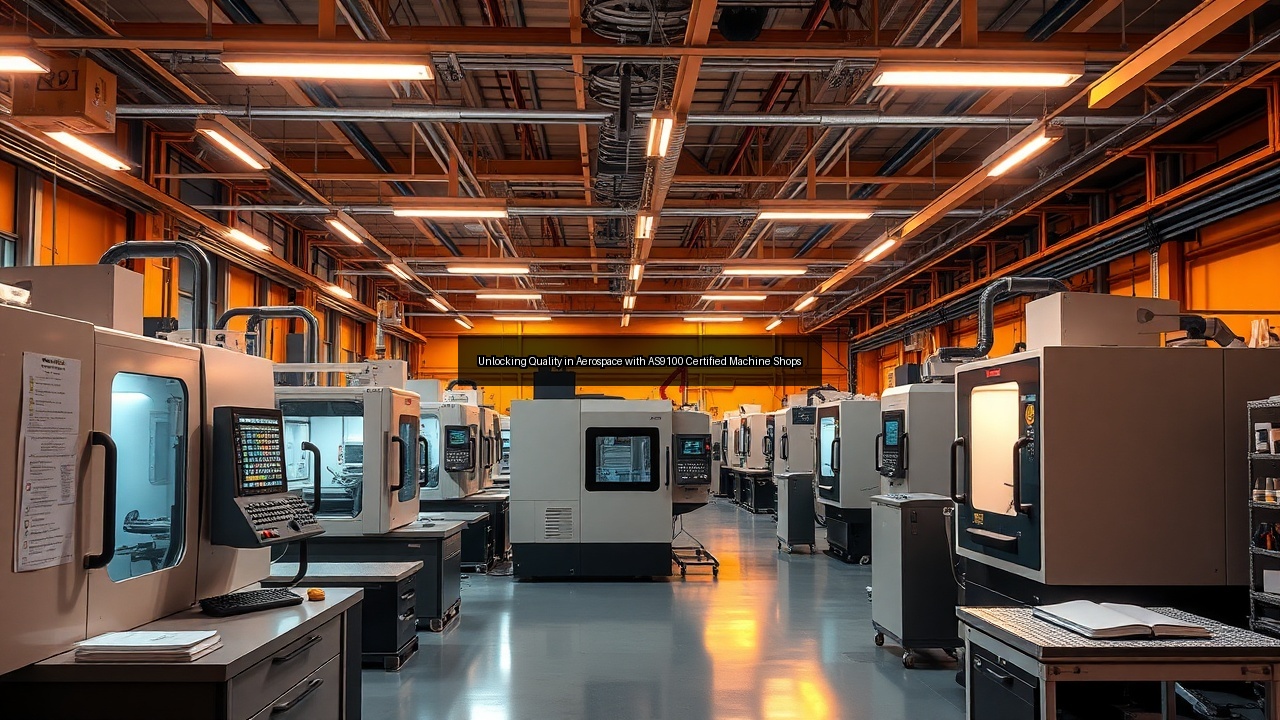
CNC machines enable AS9100 machine shops to achieve the tight tolerances aerospace components demand. Five-axis milling centers produce complex contours in single setups, reducing handling errors. Shops program these machines with verified tool paths that incorporate in-process probing for automatic offsets. AS9100 certification requires validation of all CNC programs through first-article runs before release to production. Coolant management and chip evacuation procedures protect surface integrity on critical sealing surfaces. Machine shops maintain detailed logs of tool life and wear compensation to prevent dimensional drift. Regular preventive maintenance on spindles and linear guides keeps equipment within original accuracy specifications. The combination of advanced CNC capability and disciplined process control positions certified facilities to handle next-generation aerospace designs.
Choosing the Right AS9100 Machine Shop
Checklist for Selecting an AS9100 Certified Machine Shop
Start by confirming current AS9100 certification through the registrar’s public database. Review the scope statement to ensure it covers your specific processes and materials. Examine on-time delivery metrics and customer scorecards from the past two years. Request sample first-article reports to evaluate documentation thoroughness. Visit the facility and observe cleanliness, organization, and equipment condition firsthand. Verify that the shop maintains approved supplier lists with regular performance reviews. Confirm insurance coverage and financial stability to support long-term programs. Ask for references from other aerospace customers and contact them directly. A thorough checklist protects your project from surprises after contract award.
Evaluating Quality and Performance Standards
Quality performance extends beyond certification paperwork. AS9100 machine shops should share recent internal audit findings and corrective action closures. Track key metrics such as parts-per-million defects and customer returns over multiple quarters. Compare those numbers against industry benchmarks for similar part families. Review process capability indices on critical dimensions to confirm statistical control. Evaluate how the shop handles capacity fluctuations without compromising quality gates. Strong performers maintain cross-training matrices that keep skilled operators available across multiple work centers. Consistent performance data signals a mature quality system ready for demanding aerospace applications.
Questions to Ask Potential Machine Shops
Ask how the shop manages engineering changes and maintains configuration control across revisions. Inquire about their approach to first-article inspection and how they communicate results. Probe their experience with your specific materials and tolerances. Request details on contingency plans for equipment downtime or supply disruptions. Discuss their counterfeit part prevention program and incoming inspection protocols. Explore their willingness to support on-site audits and provide real-time production status. Clarify lead times and capacity commitments for your projected volumes. Direct questions reveal operational maturity and cultural fit before commitments form.
The Future of Aerospace with AS9100 Standards
Impact on Innovation in Aerospace Manufacturing
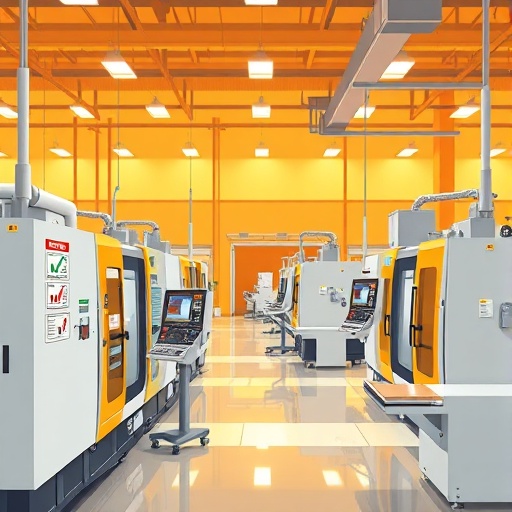
AS9100 machine shops drive innovation by providing stable process platforms that support rapid prototyping. Additive manufacturing integration now occurs under the same rigorous controls, allowing hybrid production methods. Data analytics from CNC machines feed predictive maintenance models that reduce unplanned downtime. Shops experiment with new cutting tools and coatings while preserving traceability records. The standard’s emphasis on risk management encourages calculated adoption of automation and robotics. Aerospace programs benefit from faster iteration cycles without sacrificing the safety margins the industry requires. Certified facilities become test beds for emerging technologies that eventually scale across the supply chain.
Trends in AS9100 Certification
More machine shops pursue AS9100 certification as defense and commercial programs tighten supplier requirements. Digital quality management systems replace paper records, improving audit efficiency and data accessibility. Remote audit techniques gain acceptance, lowering costs while maintaining rigor. Training programs increasingly incorporate virtual reality for process familiarization. AS9100 machine shops adopt sustainability metrics that align with broader environmental goals. Certification bodies emphasize cybersecurity controls as digital thread initiatives expand. These trends point toward a more connected, transparent supply base that responds quickly to market shifts.
Success Stories from AS9100 Machine Shops
One AS9100 machine shop reduced customer returns by 70 percent after implementing enhanced verification protocols. Another leveraged CNC machining advancements to win contracts for next-generation satellite components. A third facility used traceability improvements to resolve a material issue in under 48 hours, preserving program schedules. These examples illustrate how certification translates into measurable business results. Shops that treat AS9100 as a living system rather than a compliance exercise consistently outperform peers. Aerospace customers reward that commitment with repeat business and referrals. The pattern continues as more facilities embrace the standard’s full potential. Book your next aerospace project with an AS9100 machine shop to experience these advantages directly.