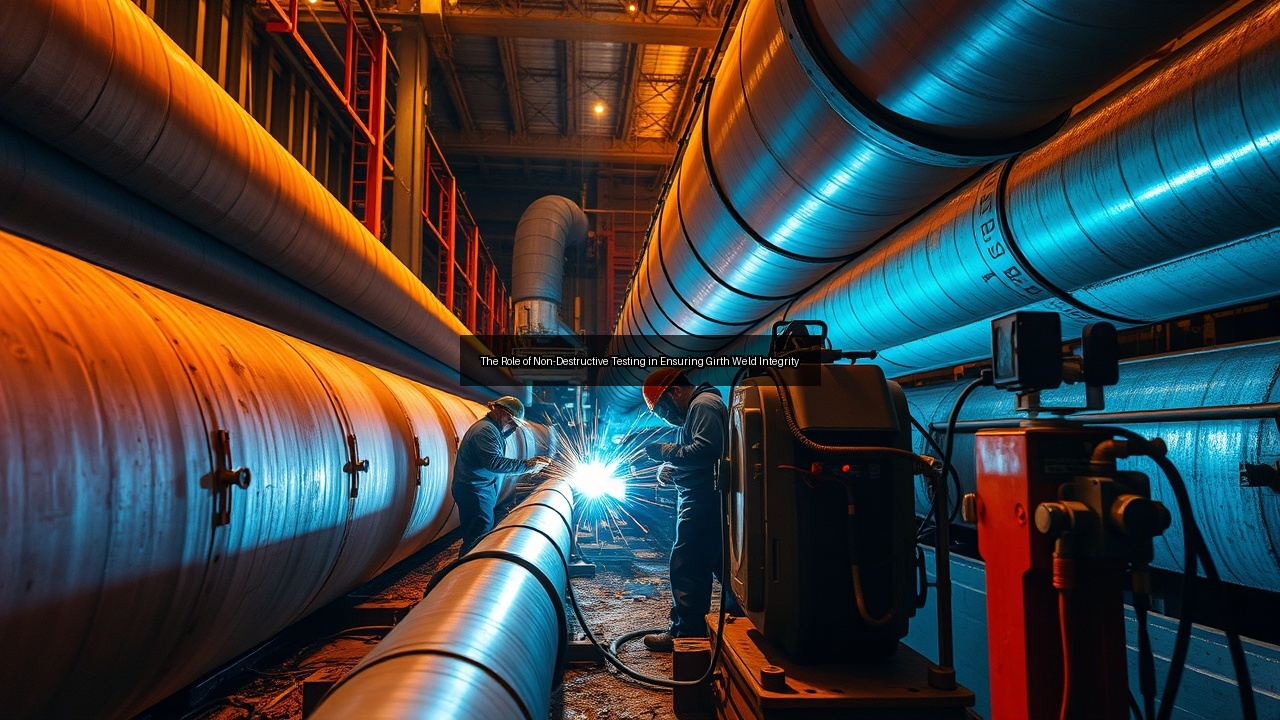
The Role of Non-Destructive Testing in Ensuring Girth Weld Integrity
Understanding Girth Welds in Pipeline Construction
Importance of Girth Welds in Pipelines
Pipeline girth welding joins individual pipe sections into long, continuous lines that transport oil, gas, and other fluids across vast distances. These circumferential welds bear the full internal pressure and external loads of the pipeline system, making their integrity essential for safe operation. A single defective girth weld can trigger leaks, ruptures, or environmental damage that halts production and triggers costly repairs. Engineers therefore treat every girth weld joint as a critical link whose strength determines overall pipeline reliability. Proper alignment, filler selection, and heat input during pipeline girth welding directly influence how well the joint resists fatigue and crack propagation over decades of service.
Common Materials Used in Girth Welding
Carbon steel remains the dominant choice for most onshore and offshore pipelines because it offers high strength at reasonable cost. Stainless steel appears in corrosive environments where resistance to pitting and stress corrosion cracking becomes vital. Some projects incorporate plastic liners inside steel pipes, while advanced applications explore platinum coatings on weld surfaces to enhance high-temperature performance. Welder skill must match the material: stainless steel demands controlled heat to avoid sensitization, whereas carbon steel tolerates wider parameter ranges. Material compatibility governs weldability and dictates the scope of pre-weld preparation required for sound pipeline girth welding results.
Factors Affecting Girth Weld Integrity
Multiple variables influence final weld quality during pipeline construction. Ambient temperature swings alter cooling rates and residual stresses. Root gap consistency, bevel angle, and travel speed determine penetration and fusion at the weld root. Hydrogen pickup from moisture or improper consumables can produce cracking. Soil movement, pressure cycling, and external corrosion further stress completed girth welds. Operators mitigate these risks through qualified weld procedures, skilled welder certification, and strict process controls that maintain consistent strength across every pipeline girth weld joint.
The Importance of Non-Destructive Testing (NDT)
Overview of Non-Destructive Testing Methods
Non-destructive testing evaluates welds without causing damage, allowing inspectors to verify integrity while the pipeline remains intact. Techniques range from visual checks to advanced imaging systems that reveal internal flaws invisible on the surface. In pipeline girth welding, NDT occurs both during construction and as part of ongoing integrity management programs. The goal is early detection of porosity, lack of fusion, cracks, or inclusions that could compromise strength. By examining welds in their as-welded condition, operators avoid unnecessary cutouts and maintain project schedules without sacrificing safety.
Key Benefits of NDT in Girth Weld Inspection
Weld inspection through non-destructive testing delivers immediate feedback on weld quality, enabling real-time adjustments by the welder. It reduces the likelihood of costly failures after commissioning and supports regulatory compliance for pipeline operators. NDT also preserves material by avoiding destructive sectioning, which saves both time and expense. When applied systematically to every girth weld, these methods build a documented record of weld integrity that proves invaluable during audits or incident investigations. Consistent use of NDT raises overall construction quality and extends service life of pipelines.
Common NDT Techniques for Girth Welds
Radiography, magnetic particle testing, dye penetrant, and ultrasonic testing rank among the most widely used methods for girth weld inspection. Ultrasonic testing excels at locating volumetric defects and planar cracks deep within thick-walled pipes. Magnetic particle testing quickly identifies surface-breaking indications on ferromagnetic materials. Each technique complements the others, forming a layered approach that covers different flaw types and locations. Pipeline operators select methods based on material thickness, weld procedure, and access constraints to achieve thorough coverage of every girth weld joint.
Techniques for Ensuring Weld Integrity
Ultrasonic Testing: Principles and Applications
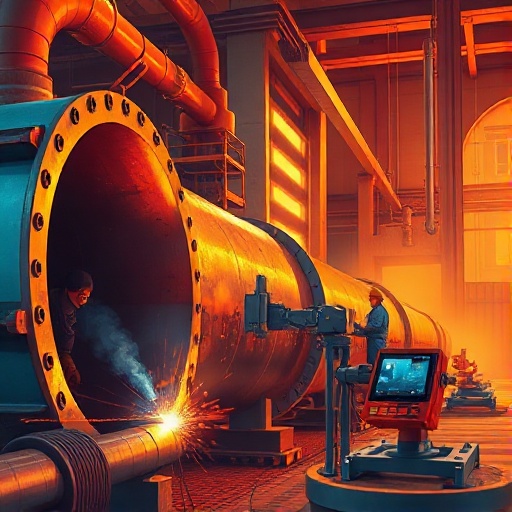
Ultrasonic testing sends high-frequency sound waves into the weld and analyzes returning echoes to map internal features. In pipeline girth welding, automated ultrasonic systems scan the entire circumference while the pipe remains in position, producing digital records of defect location and size. Phased-array probes improve resolution and allow inspectors to focus beams at multiple angles without probe movement. This capability proves especially useful for detecting lack of fusion at the weld root or mid-wall cracks that threaten long-term strength. Modern ultrasonic inspection systems integrate with welding equipment to provide immediate pass-fail decisions during construction.
Friction Stir Welding: A Modern Approach
Friction stir welding creates solid-state joints by mechanically stirring heated material without melting it. The process reduces distortion and eliminates many traditional weld defects associated with fusion welding. Although still emerging for large-diameter pipelines, friction stir welding shows promise for joining aluminum and certain steel grades where conventional methods struggle with weldability. The absence of filler metal and lower peak temperatures improve corrosion resistance and fatigue performance of completed girth welds. Research continues to adapt tool design and process parameters for reliable pipeline girth welding applications in demanding environments.
Weld Inspection Procedures for Girth Joints
Standardized procedures dictate the sequence of welding inspection activities from fit-up verification through final acceptance. Visual examination precedes surface NDT methods, followed by volumetric techniques such as ultrasonic testing or radiography. Acceptance criteria reference applicable codes that set limits on porosity, incomplete penetration, and crack length. Documentation of every step, including welder identification and parameter logs, creates traceability for each pipeline girth weld. When indications exceed limits, the procedure requires repair, re-inspection, and updated records to maintain the integrity of the overall pipeline system.
Addressing Common Issues in Girth Welds
Corrosion and Its Impact on Welds
Corrosion attacks girth welds through mechanisms such as preferential weld corrosion, pitting, and stress corrosion cracking. Differences in composition or microstructure between weld metal and base metal create galvanic cells that accelerate metal loss at the joint. Pipeline operators apply coatings, cathodic protection, and corrosion inhibitors to protect girth welds throughout their service life. Regular ultrasonic inspection and corrosion monitoring programs detect wall thinning early, allowing targeted maintenance before leaks develop. Effective corrosion management preserves the original strength designed into every pipeline girth welding joint.
Temperature Factors in Weld Strength
Temperature extremes affect both the welding process and long-term performance of girth welds. High preheat temperatures reduce hydrogen cracking risk in thick sections, while interpass temperature limits prevent excessive grain growth that lowers toughness. In service, pipelines operating at elevated temperatures experience creep and relaxation that can redistribute stresses around welds. Low ambient temperatures during construction increase the chance of brittle fracture if impact toughness is inadequate. Engineers account for these factors when qualifying weld procedures to ensure consistent strength across the expected temperature range.
Weldability Challenges in Different Materials
Each material presents unique weldability hurdles during pipeline girth welding. Stainless steel requires careful heat control to avoid carbide precipitation and loss of corrosion resistance. High-strength steels demand precise control of cooling rates to achieve target hardness without cracking. Dissimilar metal joints introduce additional complexity from differing thermal expansion and dilution effects. Pre-weld trials and procedure qualification tests establish safe parameter windows that deliver sound welds with required mechanical properties. Addressing these challenges early prevents defects that non-destructive testing would later identify.
Future Trends in Girth Welding and Inspection

Innovations in Non-Destructive Testing Technology
Advances in sensor technology and data processing continue to improve non-destructive testing for pipeline girth welding. Machine-learning algorithms now interpret ultrasonic signals with greater accuracy, reducing false calls and inspection time. Portable phased-array systems allow rapid scanning of field welds without bulky equipment. Integration of real-time monitoring during welding captures process deviations that correlate with defect formation. These innovations expand the scope of what inspectors can detect and document, ultimately raising the reliability of completed pipelines.
The Role of Automation in Pipeline Girth Welding
Automated welding systems equipped with orbital heads and closed-loop controls deliver consistent parameters across every girth weld. Robots maintain precise torch angles and travel speeds that human welders cannot sustain over long shifts. Coupled with in-process monitoring and immediate ultrasonic inspection, automation reduces variability and shortens construction schedules. Pipeline projects increasingly adopt these systems to meet tight deadlines while achieving higher weld quality. The combination of automation and advanced non-destructive testing supports the industry goal of zero-defect pipeline girth welding.
Literature Review on Advancements in Girth Weld Techniques
Recent literature highlights improvements in consumables, process modeling, and inspection standards for pipeline girth welds. Studies explore hybrid laser-arc processes that combine deep penetration with controlled heat input. Other work examines the effects of plastic deformation during installation on residual stress patterns around girth welds. Research also evaluates new inspection criteria based on engineering critical assessment rather than workmanship standards alone. Collectively, these publications guide the refinement of weld procedures and non-destructive testing protocols that will shape future pipeline construction practices.
See Also
- Essential Skills Every Welder Needs for Successful Girth Welds
- Innovative Approaches to Improving Weldability in Pipeline Girth Welding
- Understanding Girth Weld Procedures for Sustainable Pipeline Construction
- A Deep Dive into Girth Weld Joint Design and Its Implications
- The Impact of Temperature on Pipeline Girth Weld Performance