Metal Spinning vs Stamping Choosing the Right Technique for Hemispheres
Understanding Metal Spinning and Stamping
Overview of Metal Spinning
Metal spinning transforms flat sheet metal into seamless, symmetrical shapes like spun hemispheres through a dynamic process on a lathe. Skilled operators press the metal against a rotating mandrel, gradually forming it without seams or welds. This technique excels in producing hemispheres, spheres, and cones from various metals, including stainless steel and aluminum. Manufacturers favor metal spinning for its ability to create thin-walled components with uniform thickness, ideal for applications requiring strength and precision. In hemisphere manufacturing, spinning allows for custom sizes and thicknesses, ensuring the final product meets exact specifications. Unlike cutting or welding methods, spinning minimizes material waste and preserves the metal's integrity, resulting in durable spun metal hemispheres that withstand high pressures. Industries rely on this process for tank heads and pressure vessel components, where seamless construction prevents leaks and enhances safety. Metalworkers appreciate the versatility of spinning, as it handles everything from mild steel to brass, producing intricate designs that stamping often cannot achieve without multiple operations.
Overview of Stamping
Stamping shapes sheet metal by forcing it into a die using a press, creating precise forms like hemispheres through deep drawn or progressive methods. This high-volume technique suits mass production of identical parts, such as domes and cones in automotive or appliance sectors. Operators load flat metal blanks into the press, where hydraulic or mechanical force punches and bends the material into the desired hemispherical profile. Stamping shines in efficiency for simple geometries but may require secondary operations like trimming for complex shapes. In metalworking, it processes metals like carbon steel and copper quickly, though it often produces parts with thicker walls compared to spun alternatives. For spheres and hemispheres, stamping delivers consistent results across large runs, reducing per-unit costs. However, the need for expensive tooling limits its flexibility for custom orders. Manufacturers use stamping for tank components where uniformity trumps seamlessness, balancing speed with structural reliability in pressure vessel designs.
Key Differences Between Spinning and Stamping
Metal spinning and stamping diverge sharply in their approach to forming hemispheres, with spinning emphasizing craftsmanship and seamlessness while stamping prioritizes speed and scalability. Spinning rotates the metal on a mandrel, allowing gradual deformation that maintains thin, even walls ideal for spun hemispheres in high-pressure applications. Stamping, conversely, relies on dies for rapid, forceful shaping, excelling in bulk production but often introducing stress points or requiring welds. Tooling costs skyrocket for stamping custom designs, whereas spinning adapts easily with minimal setup changes, suiting low-to-medium volumes of spheres and domes. Material versatility favors spinning for ductile metals like aluminum and brass, avoiding cracks common in stamped stainless steel. Waste generation differs too: spinning conserves sheet metal by forming without excess cuts, while stamping produces scrap from die outlines. In metal manufacturing, choose spinning for prototypes or intricate hemispherical shapes; opt for stamping when churning out thousands of identical tank heads. These distinctions guide machinists toward the technique that aligns with project demands, ensuring optimal performance in metalwork.
Materials Used for Spun Hemispheres
Common Metals for Spun Hemispheres
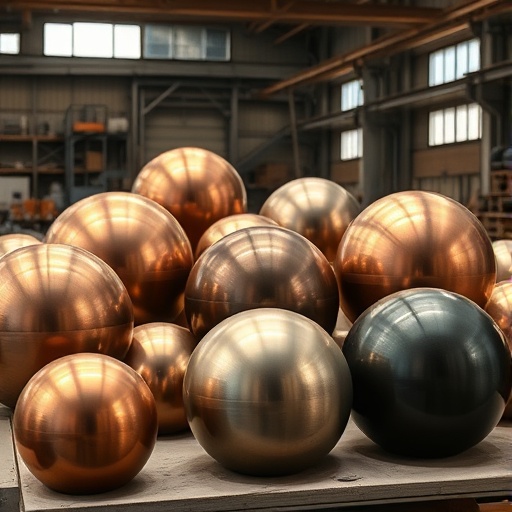
Spun hemispheres draw from a wide array of metals, each selected for its unique properties in manufacturing seamless components. Stainless steel leads due to its corrosion resistance, forming robust spheres for harsh environments like chemical tanks. Mild steel offers affordability and weldability, ideal for structural domes in construction. Aluminum provides lightweight strength, enabling spun hemispheres for aerospace applications where weight savings matter. Brass and copper add conductivity and aesthetics, suiting electrical enclosures or decorative metalwork. Carbon steel variants deliver high tensile strength for pressure vessels, while sheet metal in these forms ensures smooth spinning without defects. Manufacturers experiment with alloys to balance ductility and durability, ensuring the final hemisphere withstands operational stresses. In metal spinning, the choice of metal influences wall thickness and finish, with softer options like aluminum yielding finer details in cones and hemispheres. This diversity empowers custom OEM solutions, tailoring spun metal hemispheres to specific industry needs without compromising quality.
Advantages of Stainless Steel and Mild Steel
Stainless steel shines in spun hemisphere production for its exceptional resistance to rust and extreme temperatures, making it a staple in pressure vessel heads and tank linings. During metal spinning, stainless forms seamless shapes that endure corrosive fluids without pitting, extending service life in industrial settings. Its strength-to-weight ratio supports thin-walled designs, reducing material costs while maintaining structural integrity for hemispherical domes. Mild steel, on the other hand, provides economic benefits with good formability, allowing machinists to spin large-diameter spheres efficiently. This carbon steel variant welds seamlessly post-spinning, ideal for fabricating complete metal tanks. Both metals minimize cracking risks in deep drawn-like processes, ensuring uniform thickness in spun hemispheres. Stainless excels in sanitary applications like food processing, where hygiene demands smooth, non-porous surfaces. Mild steel suits general fabrication, offering malleability that speeds up production of cones and metalwork components. Together, they dominate hemisphere manufacturing, balancing performance, cost, and versatility for diverse OEM requirements.
Utilizing Aluminum, Brass, and Copper in Hemisphere Manufacturing
Aluminum revolutionizes hemisphere manufacturing through its low density and high ductility, enabling lightweight spun hemispheres for automotive radiators and aerospace fuel tanks. Metal spinning exploits aluminum's softness to create intricate spheres without annealing breaks, yielding corrosion-resistant parts via natural oxide layers. Brass brings antimicrobial properties and golden hues, perfect for decorative domes or marine hardware where aesthetics meet durability. In spinning, brass maintains tight tolerances for hemispherical fittings, resisting wear in plumbing systems. Copper, prized for thermal conductivity, forms efficient heat exchangers as spun metal hemispheres, conducting heat rapidly in HVAC units. These metals adapt well to sheet metal forms, allowing precise control over wall thickness during the spinning process. Manufacturers leverage their malleability to produce custom cones and pressure vessel ends, minimizing defects like tears. Aluminum cuts shipping weights for OEM spheres, brass enhances visual appeal in architectural metalwork, and copper boosts efficiency in electrical applications. Integrating these materials expands design possibilities, ensuring spun hemispheres meet exacting standards in modern manufacturing.
Applications of Spun Hemispheres
Spun Hemispheres in Pressure Vessels
Spun hemispheres form the curved ends of pressure vessels, distributing stress evenly to contain gases or liquids under high pressure. Metal spinning crafts these seamless components from stainless steel or carbon steel, eliminating weak points that welded alternatives might introduce. In chemical processing plants, hemispherical heads on tanks prevent ruptures, complying with stringent safety codes. Manufacturers spin thick-walled versions for extreme conditions, like oil refineries where temperatures soar. The process ensures uniform metal thickness, vital for withstanding internal forces in spheres integrated into larger vessels. Custom OEM designs incorporate spun hemispheres for modular assemblies, allowing easy maintenance in industrial pipelines. Mild steel options reduce costs for non-corrosive environments, while aluminum variants lighten portable pressure units. Metalworkers prioritize spinning for its ability to handle large diameters, producing domes up to several meters wide. These applications underscore spun hemispheres' role in reliable, leak-proof containment, safeguarding operations across energy and manufacturing sectors.
Hemispherical Domes for Industrial Use
Hemispherical domes, spun from durable metals like stainless steel, shield industrial equipment from weather and debris in outdoor installations. Metal spinning creates these robust covers for radar systems, satellite dishes, and storage silos, ensuring aerodynamic profiles that resist wind loads. In manufacturing facilities, domes cap reactors or fermenters, maintaining sterile environments with smooth interiors. Brass or copper variants conduct heat effectively in thermal processing domes, optimizing energy use. The seamless nature of spun hemispheres prevents moisture ingress, extending lifespan in harsh climates. Custom sizes accommodate specific machinery, from small sensor housings to massive tank roofs. Aluminum domes offer portability for temporary setups in construction sites, combining lightness with strength. Metalwork experts spin these with precise curvatures, integrating flanges for secure mounting. Industrial applications benefit from the aesthetic appeal of polished domes, blending functionality with visual harmony in architectural designs. Spun hemispherical domes thus serve as versatile protectors, enhancing operational efficiency across diverse sectors.
Custom OEM Solutions for Spheres and Hemispheres
Custom OEM solutions leverage metal spinning to deliver tailored spheres and hemispheres for specialized needs, from medical devices to defense components. Manufacturers collaborate with clients to spin prototypes from sheet metal, refining designs for optimal performance in unique applications. Stainless steel hemispheres form sterile housings for pharmaceutical mixers, while aluminum spheres suit lightweight drone payloads. Brass elements add precision to instrumentation spheres, ensuring tight seals in vacuum systems. The flexibility of spinning accommodates low-volume runs, avoiding the high tooling costs of stamping for bespoke metalwork. OEM partners specify thicknesses and finishes, producing cones and domes that integrate seamlessly into assemblies. In automotive sectors, spun hemispheres cap exhaust systems, enduring heat cycles without deformation. Metalworkers employ CNC-assisted spinning for complex geometries, meeting tolerances down to millimeters. These solutions empower innovation, providing hemispheres that enhance product reliability and market edge. By focusing on client-driven customization, OEM spinning bridges design intent with practical manufacturing excellence.
Choosing the Right Technique for Your Project
Factors to Consider: Design and Functionality
Design complexity and functional requirements dictate whether metal spinning or stamping best suits hemisphere production. Intricate shapes with varying thicknesses favor spinning, as it molds sheet metal fluidly without dies, ideal for custom spheres in artistic metalwork. Functionality drives material choice: stainless steel hemispheres for corrosive environments demand spinning's seamlessness to avoid stress concentrations. Stamping excels for simple, high-strength domes where uniformity ensures load-bearing capacity in tanks. Consider tolerances—spinning achieves finer details in brass components, while stamping handles carbon steel's rigidity for mass-produced pressure vessels. Prototype needs lean toward spinning's adaptability, allowing iterations without retooling. Volume plays a role: low runs of aluminum hemispheres benefit from spinning's efficiency, high volumes from stamping's speed. Environmental factors, like pressure ratings, prioritize spinning for thin-walled designs that distribute forces evenly. Machinists evaluate these elements holistically, ensuring the technique aligns with end-use performance, from industrial cones to decorative metal spheres.
Cost-Effectiveness of Spinning vs Stamping
Cost-effectiveness hinges on production scale when comparing spinning and stamping for hemispheres. Metal spinning proves economical for small batches of custom spheres, with low tooling expenses and minimal waste from sheet metal. Initial setup costs drop for prototypes, allowing quick adjustments in stainless or mild steel forms. Stamping amortizes high die investments over thousands of units, slashing per-piece costs for identical domes in tank manufacturing. Labor varies: spinning requires skilled metalworkers for precision, while stamping automates for volume efficiency. Material utilization favors spinning, preserving more metal in hemispherical shapes versus stamping's scrap. Long-term savings emerge in maintenance—seamless spun hemispheres reduce repairs in pressure vessels compared to stamped parts prone to cracks. OEM projects balance these: spinning for niche copper applications, stamping for brass mass production. Factor in lead times; spinning accelerates custom orders, stamping delays with tool fabrication. Ultimately, align technique with budget and output to maximize value in metalwork endeavors.
Expert Insights from Machinists and Metalworkers
Machinists and metalworkers emphasize hands-on experience when selecting spinning over stamping for hemispheres, highlighting the tactile feedback that ensures flawless forms. Seasoned pros note spinning's superiority for ductile metals like aluminum, where operators control deformation to avoid thinning defects common in stamped carbon steel. They advise starting with material testing: stainless steel spins smoothly for pressure vessel heads, yielding durable results without post-process annealing. Insights reveal stamping's pitfalls in complex geometries, often necessitating multiple dies that inflate costs for custom spheres. Metalworkers share that spinning fosters innovation, enabling one-off cones with integrated features unattainable via stamping. Collaboration with engineers uncovers functionality gaps—spinning preserves grain structure for stronger hemispheres in high-stress apps. Pros recommend hybrid approaches for OEM, combining stamped bases with spun tops for optimal economics. From shop floors, they stress safety: spinning's lower forces reduce machine wear, extending tool life. These expert perspectives guide informed choices, blending tradition with precision in modern metal manufacturing.
Future Trends in Hemisphere Manufacturing
Innovations in Metal Spinning Technology
Innovations in metal spinning technology propel hemisphere manufacturing toward greater precision and efficiency, integrating CNC controls for automated mandrel adjustments. Advanced lathes spin complex spheres from hybrid metals like aluminum-stainless composites, achieving sub-millimeter accuracies for aerospace domes. Laser-assisted spinning heats localized areas, enhancing formability in high-strength steels without cracks. Additive manufacturing hybrids layer features onto spun hemispheres, creating multifunctional tank heads with embedded sensors. Software simulations predict metal flow, minimizing trials for custom OEM brass components. These advancements reduce cycle times by 30%, enabling rapid prototyping of pressure vessels. Metalworkers adopt hybrid spinning-stamping lines for seamless transitions in production. Sustainability drives eco-friendly lubricants and recyclable mandrels, cutting environmental impact. Innovations extend to micro-spinning for tiny copper hemispheres in electronics, broadening applications. As technology evolves, spinning cements its role in delivering superior, innovative metalwork solutions.
Sustainability in Metalworking Practices
Sustainability reshapes metalworking practices for hemisphere production, emphasizing recycled metals and energy-efficient processes. Manufacturers source post-consumer stainless steel for spun hemispheres, reducing mining demands while maintaining quality in pressure vessels. Water-based coolants replace oils in spinning, minimizing hazardous waste in sheet metal operations. Energy recovery systems capture lathe heat, powering facilities that produce aluminum domes. Lifecycle assessments guide material choices, favoring mild steel for recyclable tank components over less sustainable alternatives. OEM partners adopt closed-loop recycling, reclaiming brass scraps from spinning runs to form new spheres. Low-waste designs optimize sheet metal usage, slashing emissions in carbon steel manufacturing. Certifications like ISO 14001 ensure ethical sourcing, appealing to eco-conscious clients. Metalworkers innovate with biodegradable tools, further greening the process. These practices not only cut costs but elevate industry standards, ensuring spun hemispheres contribute to a circular economy without sacrificing performance.
The Role of Automation in Hemisphere Production
Automation transforms hemisphere production by streamlining metal spinning and stamping workflows, boosting output while preserving quality. Robotic arms load sheet metal into spinners, executing precise pressure sequences for uniform stainless steel domes. AI-driven monitoring detects anomalies in real-time, preventing defects in aluminum sphere runs. Automated trimming stations finish spun hemispheres post-forming, integrating seamlessly with stamping lines for hybrid efficiency. In OEM settings, programmable logic controllers customize cycles for brass cones, adapting to varied specs without manual tweaks. Vision systems inspect wall thickness, ensuring compliance for pressure vessel applications. Automation reduces labor needs, allowing machinists to focus on oversight and innovation. Collaborative robots assist in handling large carbon steel blanks, enhancing safety in high-volume metalwork. Data analytics optimize energy use, predicting maintenance for extended uptime. As adoption grows, automation democratizes advanced hemisphere manufacturing, enabling smaller shops to compete with precision and speed unmatched by traditional methods.
See Also
- Why Stainless Steel is the Preferred Material for Spun Hemispheres
- The Future of Hemispherical Design in OEM Metalwork
- The Versatility of Spun Hemispheres in Pressure Vessel Design
- Unveiling the Secrets of Crafting Custom Spun Hemispheres
- Transforming Steel and Aluminum into Stunning Spun Hemispheres