Mastering Hydraulic Valve Machining Techniques for Precision Manufacturing
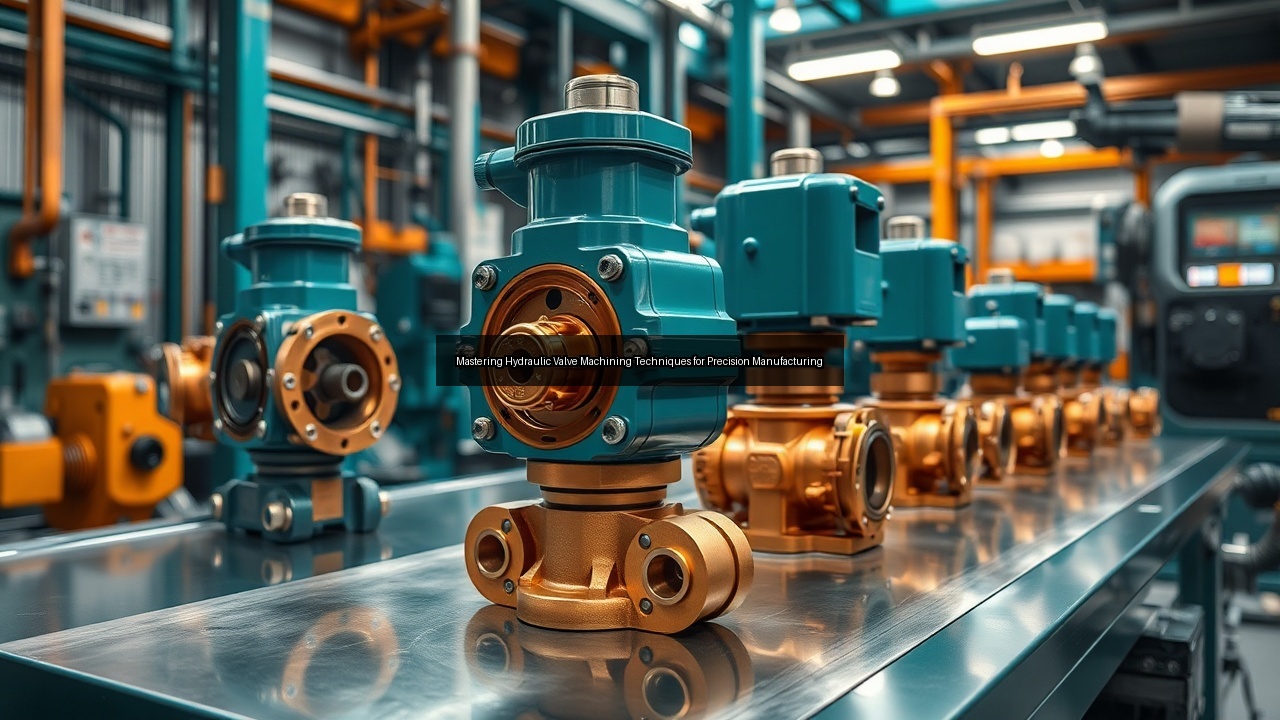
Introduction to Hydraulic Valve Machining
Importance of Hydraulic Valves in Manufacturing
Hydraulic valves stand as critical components in modern manufacturing, controlling fluid flow within hydraulic systems to power machinery across industries. These valves ensure precise operation in everything from heavy equipment to automated production lines, where even minor failures can halt operations and cause costly downtime. Manufacturers rely on hydraulic valve machining to produce parts that withstand high pressures and corrosive environments, integrating seamlessly into larger hydraulic setups. The demand for reliable hydraulic valves surges in sectors like construction and aerospace, where hydraulics drive efficiency and safety. Precision in machining these valves directly impacts system performance, reducing leaks and enhancing longevity. As manufacturing evolves, mastering hydraulic valve machining becomes essential for staying competitive, allowing engineers to customize designs for specific applications. This process not only meets stringent standards but also innovates solutions for complex hydraulic challenges, underscoring the valve's role in advancing industrial productivity.
Overview of Machining Techniques
Hydraulic valve machining encompasses a range of techniques tailored to create intricate structures within valve bodies, spools, and manifolds. Engineers start with foundational processes like casting to form the base metal structure, followed by drilling and milling to carve precise channels and ports. These methods ensure the valve's internal geometry supports optimal fluid dynamics in hydraulic systems. Advanced hydraulic valve machining incorporates computer numerical control (CNC) machines for repeatability, minimizing human error in high-volume production. Surface finishing techniques address burrs that could impede flow or cause wear, while inspection verifies accuracy against design specs. From prototype development to full-scale manufacturing, these techniques adapt to various metals, balancing durability with machinability. Understanding this overview equips manufacturers to select the right approach, enhancing the overall integrity of hydraulic valves and their integration into broader hydraulics applications.
Essential Tools and Equipment for Hydraulic Valve Machining
Types of Machines Used: Drilling and Milling
Drilling and milling machines form the backbone of hydraulic valve machining, enabling manufacturers to shape metal components with exceptional detail. Drilling machines penetrate valve bodies to create ports and passages essential for fluid control, using specialized drill bits that handle tough materials like steel or aluminum. Milling operations follow, employing multi-axis machines to mill complex surfaces, slots, and contours on spools and manifolds. CNC-controlled drilling and milling ensure consistency, vital for hydraulic valves operating under variable pressures. These machines integrate coolant systems to prevent overheating, preserving the metal's structure during prolonged runs. In precision manufacturing, selecting the appropriate machine—whether a vertical mill for flat surfaces or a horizontal drill for deep holes—directly influences production speed and quality. Manufacturers often combine these tools in workflow sequences, achieving machined valves ready for assembly in automotive or industrial hydraulic systems.
CAD Software in Valve Design
CAD software revolutionizes hydraulic valve design, allowing engineers to model intricate components virtually before any metal touches a machine. Tools like AutoCAD or SolidWorks enable precise visualization of valve structures, including spool movements and manifold integrations, streamlining the transition from concept to prototype. In hydraulic valve machining, CAD facilitates simulation of fluid flow and stress points, identifying potential flaws early to optimize designs for manufacturing. Designers incorporate tolerances and material properties directly into models, ensuring machinability without compromising performance. This digital approach reduces waste, as virtual iterations refine the design before physical production begins. For hydraulic systems, CAD supports customization, such as tailoring valve ports for specific pressure ratings in automotive applications. By bridging creativity and precision, CAD empowers manufacturers to produce innovative, reliable hydraulic valves that meet diverse industry needs.
Material Selection for Optimal Performance
Material selection drives the success of hydraulic valve machining, as the chosen metal must endure hydraulic pressures while allowing efficient machining. Stainless steel offers corrosion resistance for valves in harsh environments, though it demands robust machines to overcome its hardness. Aluminum provides lightweight options for automotive hydraulics, easing machining with its softer structure yet requiring careful handling to avoid deformation. Brass suits low-pressure valves, balancing cost with machinability for rapid production runs. Engineers consider factors like thermal conductivity and fatigue strength during selection, ensuring the material aligns with the valve's functional demands. In manifold designs, composite metals enhance durability without adding weight. Proper material selection not only boosts accuracy in drilling and milling but also extends the lifespan of machined hydraulic valves, minimizing maintenance in manufacturing setups. This strategic choice underpins high-performance outcomes across hydraulics applications.
Machining Processes for Hydraulic Valves
Casting Techniques for Valve Bodies
Casting techniques lay the foundation for hydraulic valve bodies, shaping raw metal into robust structures ready for further machining. Die casting injects molten metal under pressure into molds, producing dense valve housings with minimal porosity ideal for high-pressure hydraulics. Sand casting offers flexibility for larger prototypes, allowing complex internal geometries in spools and manifolds. Manufacturers heat alloys like bronze or cast iron to liquid states, pouring them into precision molds that define the valve's outer form. Post-casting, cooling controls the metal's microstructure, influencing subsequent drilling and milling ease. This process ensures uniformity, critical for maintaining accuracy in hydraulic systems. Innovations in vacuum casting reduce defects, yielding smoother surfaces that cut down on finishing time. By starting with solid casting techniques, hydraulic valve machining achieves durable bases that support intricate operations without structural weaknesses.
Drilling and Milling Operations
Drilling and milling operations transform cast valve bodies into functional hydraulic components, carving precise pathways for fluid control. Drilling employs high-speed bits to bore holes for ports and threads, often using CNC machines to hit exact depths and angles in metal structures. Milling follows with rotating cutters that sculpt surfaces, creating seats for spools and channels in manifolds. These operations demand sharp tools and steady feeds to avoid chatter, which could compromise the valve's accuracy. In hydraulic valve machining, multi-tool setups allow simultaneous drilling and milling, boosting efficiency in production lines. Coolants flush away chips, preventing burrs from forming inside delicate passages. Skilled operators monitor spindle speeds tailored to the material, ensuring clean cuts that enhance flow efficiency. This sequential approach guarantees machined valves perform reliably in demanding manufacturing environments.
Managing Burrs and Surface Finishing
Managing burrs and surface finishing refines machined hydraulic valves, eliminating imperfections that could disrupt hydraulics performance. Burrs—raised edges from drilling and milling—arise on metal edges and require deburring tools like files or abrasive brushes to smooth them away. Vibratory finishing tumbles valves in media baths, polishing internal surfaces without altering tolerances. Electrochemical methods dissolve burrs selectively, ideal for intricate spool designs. Surface finishing then applies grinding or honing to achieve mirror-like finishes, reducing friction in valve operations. Manufacturers inspect for residual burrs using magnification, as even tiny ones can cause leaks in high-pressure systems. This phase enhances the valve's structure, improving sealing and longevity. Proper management ensures hydraulic valves meet automotive standards, where smooth surfaces prevent wear and maintain accuracy over thousands of cycles.
Achieving Precision and Accuracy in Machining
Understanding Tolerances in Valve Manufacturing
Understanding tolerances in valve manufacturing sets the benchmark for hydraulic valve machining success, defining acceptable deviations in dimensions and geometries. Tight tolerances, often within microns, ensure spools fit snugly in bodies, preventing hydraulic leaks under pressure. Manufacturers specify positional tolerances for drilling holes in manifolds, aligning them precisely for fluid paths. Geometric dimensioning and tolerancing (GD&T) standards guide designs, accommodating material expansion in metal structures. During machining, CNC machines adhere to these limits, using probes for real-time adjustments. Loose tolerances suit prototypes, but production valves demand precision to match system requirements. This knowledge allows engineers to balance cost with performance, producing accurate hydraulic valves that integrate seamlessly into manufacturing processes. Mastering tolerances ultimately safeguards reliability in diverse applications.
Inspection Techniques for Quality Assurance
Inspection techniques for quality assurance verify the integrity of machined hydraulic valves, catching defects before they reach assembly. Visual checks spot surface irregularities, while coordinate measuring machines (CMM) scan dimensions against CAD models for accuracy. Ultrasonic testing detects internal voids in cast structures, ensuring no hidden flaws compromise the valve's strength. For hydraulic components, flow bench inspections simulate pressures to confirm port alignments. Manufacturers employ gauges for thread and bore measurements, adhering to tolerances that define precision. Digital microscopy magnifies burrs or tool marks, guiding rework if needed. These methods integrate into production lines, providing data for continuous improvement. Robust inspection upholds manufacturing standards, delivering hydraulic valves that excel in performance and durability.
Functional Testing: Ensuring Performance Standards
Functional testing ensures machined hydraulic valves meet performance standards, simulating real-world conditions to validate operation. Testers pressurize valves with hydraulic fluid, monitoring spool shifts and leak rates to confirm response times. Cycle testing repeats open-close actions thousands of times, assessing wear on metal surfaces and seals. Manufacturers use data loggers to track pressure drops, verifying accuracy in flow control. For automotive valves, endurance tests mimic engine vibrations, ensuring structural integrity. This phase identifies issues like sticking burrs or tolerance mismatches, prompting refinements. Successful functional testing certifies valves for deployment, enhancing trust in hydraulics systems. By prioritizing this step, manufacturers achieve superior quality, reducing field failures and extending service life.
Applications and Innovations in Hydraulic Valve Machining
Prototype Development for Automotive Applications
Prototype development for automotive applications accelerates hydraulic valve machining innovations, tailoring components for vehicle systems like brakes and transmissions. Engineers use rapid prototyping machines to mill initial spools from aluminum, testing fits in miniature manifolds. CAD-driven designs iterate quickly, incorporating feedback from functional testing to refine tolerances. In automotive manufacturing, prototypes undergo vibration and thermal cycling to mimic road conditions, ensuring durability. 3D printing complements traditional casting for complex structures, speeding up design validation. This process allows manufacturers to customize valves for electric vehicle hydraulics, optimizing energy efficiency. Successful prototypes pave the way for scaled production, integrating seamlessly into assembly lines. Hydraulic valve machining in this realm drives automotive advancements, delivering precise control for safer, more efficient rides.
Future Trends in Machining Technologies
Future trends in machining technologies promise to elevate hydraulic valve production, with additive manufacturing layering metals for intricate valve designs unattainable through traditional drilling and milling. AI-integrated CNC machines predict tool wear, maintaining accuracy in high-volume runs. Hybrid processes combine casting with laser machining, creating burr-free surfaces directly. Sustainable practices emerge, using recyclable metals and eco-friendly coolants in hydraulic valve machining. Nanotechnology coatings enhance valve durability, resisting corrosion in advanced hydraulics. For manufacturers, these trends mean faster prototyping and reduced waste, adapting to demands in automotive and beyond. As automation rises, robotic arms handle inspections and finishing, ensuring consistent quality. Embracing these innovations positions the industry for precision manufacturing breakthroughs, redefining hydraulic valve capabilities.
Case Studies of Successful Machined Hydraulic Valves
Case studies of successful machined hydraulic valves highlight real-world triumphs in precision manufacturing, showcasing techniques that deliver outstanding results. A leading automotive manufacturer developed custom spools via CNC milling, achieving tolerances under 0.01mm for transmission valves, which improved shift speeds by 15%. Another case involved a heavy equipment firm using investment casting followed by deburring, producing manifold-integrated valves that withstood 5000 psi without leaks, extending machine uptime. In aerospace, a prototype valve machined from titanium via multi-axis drilling passed rigorous functional testing, reducing weight while maintaining hydraulic flow accuracy. These examples demonstrate how material selection and inspection techniques converge for success. Manufacturers worldwide draw lessons from such cases, applying insights to innovate in valve machining and hydraulics applications, proving the value of meticulous processes.
See Also
- Selecting the Right Materials for Optimal Hydraulic Valve Performance
- Exploring the Impact of Machining Accuracy on Hydraulic Valve Efficiency
- From Casting to Machined Perfection The Journey of Hydraulic Valves
- Innovative CAD Solutions Transforming Hydraulic Valve Design and Machining
- Advancements in Milling and Drilling for Superior Hydraulic Valve Machining