How CNC Technology Revolutionizes Shaft Machining Efficiency
Understanding Shaft Machining in Modern Manufacturing
Definition and Importance of Shaft Machining
Shaft machining forms the core of mechanical engineering processes, where engineers shape raw materials into precise rotating components essential for power transmission. At its foundation, shaft machining involves cutting, grinding, and finishing cylindrical parts that transfer torque from motors to other machinery elements. This process ensures shafts withstand high stresses while maintaining dimensional accuracy and surface finish. In modern manufacturing, shaft machining drives efficiency across industries, from automotive to aerospace, by producing reliable parts that minimize vibration and deflection. Without precise shaft machining, systems like drive shafts in vehicles or countershafts in transmissions would fail prematurely, leading to costly downtime. Manufacturers rely on advanced techniques such as CNC turning and milling to achieve tight tolerances, often within microns, which directly impacts the overall performance of mechanical systems. The importance of shaft machining extends to custom applications, where machining services tailor shafts to specific geometries, including splined or threaded designs. As industries demand higher reliability, understanding what is shaft machining becomes crucial for optimizing production workflows and ensuring components meet stringent specifications. This process not only defines the backbone of rotating machinery but also influences energy efficiency and longevity in everything from industrial motors to precision tools.
Key Components of Shaft Design
Engineers focus on several critical elements when designing shafts to ensure they handle torque, rotational speeds, and mechanical loads effectively. The core structure revolves around the shaft's diameter, length, and overall geometry, which dictate its strength and resistance to bending or twisting. Key features include keyways for securing pulleys or gears, splines for torque transmission, and threads for assembly connections. Designers calculate the shaft's cross-sectional shape—often circular but sometimes customized for specific applications—to optimize the strength-to-weight ratio. Tolerances play a vital role, specifying allowable deviations in dimensions to guarantee fit and function within assemblies. In complex designs, elements like fillets reduce stress concentrations, while heat treatment considerations enhance material properties post-machining. Shaft design also incorporates factors such as surface finishing to minimize friction and wear during operation. For instance, in power transmission systems, the precise alignment of features like cams or grooves ensures smooth interaction with mating parts. Modern design for manufacturing principles integrate these components early, using software to simulate stresses and deflection, resulting in shafts that boost machinery reliability. By prioritizing these aspects, manufacturers produce shafts that not only meet but exceed performance expectations in demanding environments.
Common Materials Used in Shaft Machining
Selecting the right material drives the success of shaft machining, balancing strength, machinability, and cost for diverse applications. Carbon steel stands as a workhorse due to its affordability and ease of machining, ideal for general-purpose shafts in machinery. For higher durability, alloy steel offers superior tensile strength and resistance to fatigue, commonly used in transmission components. Stainless steel provides corrosion resistance, making it perfect for harsh environments like marine or chemical processing equipment. Aluminum appeals in lightweight designs, such as aerospace shafts, where reducing weight improves fuel efficiency without sacrificing structural integrity. Titanium and other exotic alloys enter the picture for extreme conditions, though their higher cost demands precise material selection strategies. During machining, these materials influence tool choices— softer aluminum requires different speeds than tough alloy steel to achieve optimal surface finish. Heat treatment processes, like quenching or tempering, further refine properties post-machining, enhancing hardness and wear resistance. Manufacturers evaluate factors like thermal expansion coefficients to prevent distortion during production. Ultimately, smart material selection in shaft machining ensures components deliver reliable performance, from high-torque drive shafts to precision-ground spindles, while keeping production costs in check.
CNC Technology: The Backbone of Efficient Shaft Machining
How CNC Machines Enhance Precision and Accuracy
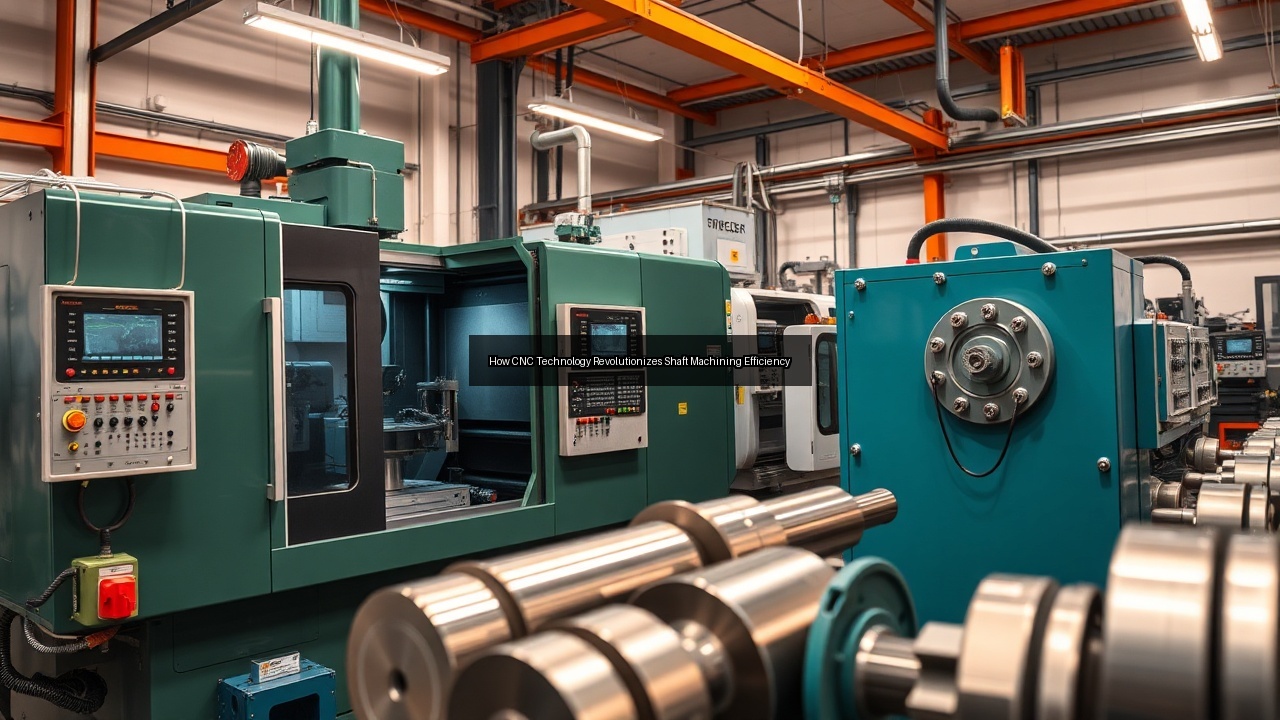
CNC machines transform shaft machining by delivering unmatched precision that manual methods simply cannot match. These computer-controlled systems follow programmed instructions to cut, drill, and shape shafts with tolerances as tight as 0.001 inches, ensuring every diameter and length meets exact specifications. Accuracy stems from the CNC's ability to maintain consistent parameters, eliminating human error in repetitive tasks like threading or grinding. In shaft production, this means surfaces achieve mirror-like finishes, reducing friction in rotating applications. Advanced CNC technology incorporates feedback loops for real-time adjustments, compensating for minor deviations during high-speed operations. For complex geometries, such as splined shafts or those with intricate keyways, CNC ensures uniformity across batches, boosting reliability in mechanical engineering assemblies. Manufacturers benefit from reduced scrap rates, as the machines optimize paths to minimize material waste. This precision extends to multi-axis setups, allowing simultaneous machining of features that enhance torque transmission without compromising shape integrity. Overall, CNC machines redefine shaft machining services, making high-accuracy production scalable and efficient for industries demanding flawless components.
The Role of CNC Turning and Milling in Shaft Production
CNC turning and milling anchor the shaft production process, each excelling in creating specific features with speed and versatility. Turning operations rotate the workpiece against a stationary tool to generate cylindrical shapes, diameters, and threads essential for shafts. This method shines in producing long, straight sections with excellent concentricity, vital for balancing and minimizing vibration in rotating parts. Milling, on the other hand, uses rotating cutters to form flat surfaces, slots, and complex profiles like splines or cams on stationary shafts. Combining both in CNC setups allows seamless transitions—turning roughs out the basic form, while milling adds detailed geometries for power transmission. In shaft manufacturing, these processes handle materials from aluminum to alloy steel, adjusting speeds and feeds for optimal chip removal and surface finish. CNC programming enables intricate threading with precise lead angles, crucial for secure assemblies. For countershafts or drive shafts, multi-tool turrets perform drilling and boring in one cycle, slashing production time. This integrated approach not only accelerates shaft machining but also ensures dimensional consistency, making CNC turning and milling indispensable for high-volume output and custom machining services.
Automation and Process Control in CNC Machining
Automation in CNC machining revolutionizes shaft production by integrating robotic loading, unmanned operations, and smart monitoring for uninterrupted efficiency. CNC systems automate tool changes, reducing downtime between turning, milling, and grinding tasks on a single machine. Process control software oversees parameters like spindle speed, coolant flow, and feed rates, adapting in real-time to maintain quality across batches. Sensors detect anomalies, such as excessive vibration, triggering pauses to prevent defects in shaft geometry or surface finish. This level of control ensures threads, diameters, and tolerances align perfectly, even in high-complexity designs. For shaft machining services, automation scales production from prototypes to mass runs, incorporating design for manufacturing to streamline workflows. Predictive algorithms forecast tool wear, scheduling maintenance without halting lines. In mechanical engineering, these features enhance reliability, as automated systems produce shafts with consistent torque-handling capabilities. Overall, CNC automation and process control cut labor costs while elevating precision, positioning the technology as a cornerstone for modern manufacturing excellence.
Enhancing Workflow and Reducing Costs with CNC Technology
Optimizing Material Selection for Cost-Effective Machining
Smart material selection paired with CNC technology slashes costs in shaft machining by aligning properties with application needs and machinability. Engineers evaluate options like carbon steel for budget-friendly, high-volume runs or stainless steel for corrosion-prone settings, ensuring the choice supports efficient CNC turning and milling. CNC machines optimize cutting parameters for each material—faster feeds for aluminum reduce cycle times, while slower passes on alloy steel preserve tool life. This approach minimizes waste through precise nesting of parts on stock material, directly impacting the cost of shaft production. Heat treatment integration post-machining enhances durability without excessive expenses. For automotive shafts, selecting materials with low thermal expansion prevents distortion, avoiding rework. Workflow improvements include digital simulations to test selections virtually, refining choices before machining begins. By focusing on machinability ratings, manufacturers achieve superior surface finishes and tight tolerances economically. Ultimately, optimized material selection transforms CNC machining into a cost-saving powerhouse, delivering high-quality shafts that balance performance and affordability across industries.
Streamlining Operations: From Design to Manufacturing
CNC technology streamlines shaft operations by bridging design and manufacturing through integrated CAD-CAM software, accelerating the entire pipeline. Designers create 3D models incorporating specifications like length, diameter, and spline geometry, which CAM tools convert into CNC code for seamless execution. This eliminates manual programming errors, enabling rapid prototyping of custom shafts with features like keyways or threads. In production, CNC machines handle complex workflows, from roughing to finishing, in one setup, reducing handling and setup times. For shaft manufacturing, modular fixturing allows quick switches between jobs, boosting throughput. Automation scripts manage sequences, ensuring consistent process control from batch to batch. This end-to-end efficiency cuts lead times dramatically, vital for just-in-time delivery in automotive or aerospace sectors. Quality checks embed directly into the workflow, flagging issues early to prevent costly delays. By fostering design for manufacturing, CNC streamlines operations, enhancing overall productivity and reducing the complexity of shaft machining services.
Quality Control Protocols and Inspection Techniques
Robust quality control protocols in CNC shaft machining safeguard against defects, employing advanced inspection techniques to verify every dimension and feature. Operators implement in-process checks using probes on CNC machines to measure diameters and lengths mid-cycle, ensuring tolerances hold during turning or milling. Post-machining, coordinate measuring machines (CMM) scan shafts for geometric accuracy, detecting deviations in threads, splines, or surface finish. Visual and non-destructive testing, like ultrasonic inspection, identifies internal stresses or cracks invisible to the eye. Protocols include statistical process control charts to monitor parameters, maintaining consistency in high-volume production. For machined shafts, surface roughness testers quantify finish quality, crucial for low-friction applications. Calibration of tools and machines forms the backbone, with regular audits upholding standards. In quality assurance, these techniques integrate with automation, generating reports for traceability. This comprehensive approach not only meets specifications but exceeds them, building trust in shaft machining services and ensuring reliability in critical systems like power transmission.
Addressing Challenges in Shaft Machining
Managing Tool Wear and Maintenance Strategies
Tool wear poses a persistent challenge in shaft machining, but strategic maintenance extends life and sustains efficiency in CNC operations. Cutting tools degrade from friction and heat during turning, milling, or grinding, especially on tough materials like alloy steel. CNC technology counters this with adaptive controls that adjust feeds based on wear patterns, preserving accuracy in diameters and threads. Regular inspections using microscopy reveal edge dulling, prompting timely replacements. Coolant systems mitigate thermal buildup, reducing wear rates by 30-50% in high-speed runs. Maintenance strategies include scheduled sharpening or indexing of inserts, integrated into automation schedules to minimize downtime. For complex shafts, selecting coated tools resists abrasion, handling torque-intensive features without frequent swaps. Predictive maintenance software analyzes vibration data to forecast failures, optimizing tooling budgets. These practices ensure consistent surface finish and dimensional stability, vital for precision components. By proactively managing tool wear, manufacturers enhance CNC machining reliability, cutting costs and upholding quality in demanding production environments.
Understanding Thermal Expansion and Its Effects
Thermal expansion disrupts shaft machining by altering dimensions during heated processes, demanding careful management for precision outcomes. Materials like aluminum expand more than stainless steel under CNC-generated heat from cutting or drilling, potentially skewing tolerances in lengths or diameters. Engineers account for this by programming compensation algorithms in CNC systems, adjusting paths to counteract expansion in real-time. Coolant application stabilizes temperatures, preventing warping in long shafts prone to deflection. In design, selecting low-expansion alloys or incorporating heat treatment phases post-machining restores shape integrity. For threaded or splined features, uneven heating can distort leads, affecting assembly fit. Simulation tools predict effects, guiding parameter tweaks for uniform heat distribution. Quality control verifies post-cool dimensions, ensuring compliance with specifications. Addressing thermal expansion enhances workflow reliability, particularly in high-precision sectors like aerospace, where even minor changes impact performance. Through informed strategies, CNC technology tames this challenge, delivering shafts with unwavering accuracy and minimal rework.
Mitigating Vibration and Stresses During Machining
Vibration and stresses challenge shaft machining integrity, but CNC advancements effectively mitigate them for smoother, defect-free production. High-speed turning or milling induces vibrations that chatter tools, marring surface finish and inducing residual stresses in shafts. Balanced tooling and rigid machine setups dampen these forces, maintaining geometry in features like keyways or cams. Dynamic balancing of spindles prevents harmonic resonances, crucial for long shafts susceptible to deflection. Stresses from torque or clamping can cause micro-cracks, addressed by optimized fixturing that distributes loads evenly. CNC sensors monitor vibrations, auto-adjusting speeds to stay within safe parameters. For materials like carbon steel, vibration-absorbing inserts reduce transmission to the workpiece. Post-machining relief cuts or heat treatment relieves built-up stresses, enhancing durability. In complex geometries, finite element analysis pre-machining identifies hotspots, refining strategies. These mitigation techniques boost quality assurance, ensuring shafts withstand operational loads without failure. By conquering vibration and stresses, CNC machining elevates shaft production to new levels of efficiency and reliability.
Applications of Shaft Machining Across Industries
Shaft Machining in Aerospace: Meeting Rigorous Tolerances
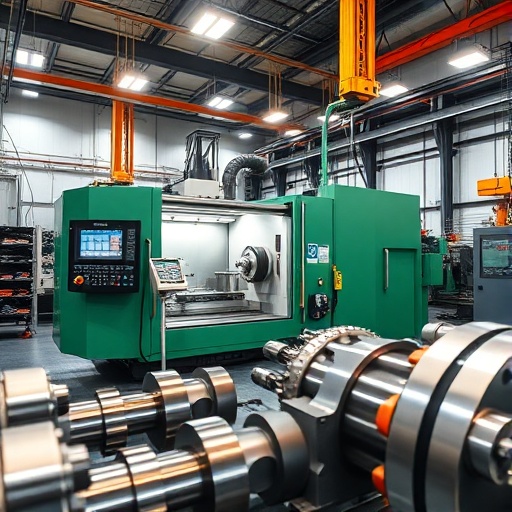
Aerospace demands ultra-precise shaft machining to meet rigorous tolerances that ensure safety and performance in extreme conditions. CNC machines craft lightweight aluminum or titanium shafts for actuators and turbines, achieving micron-level accuracy in diameters and lengths to handle high torque without deflection. Features like splines and threads must align perfectly for vibration-free operation at supersonic speeds. Material selection favors alloys with minimal thermal expansion, preventing failures during heat-intensive flights. Inspection protocols, including CMM and X-ray, verify every dimension, complying with FAA standards. CNC turning produces concentric forms, while milling adds complex geometries for control systems. These shafts power critical components, from landing gear drives to engine transmissions, where reliability trumps all. Innovations in CNC automation enable rapid prototyping for custom designs, streamlining aerospace manufacturing workflows. By delivering flawlessly machined shafts, the industry advances aircraft efficiency and safety, showcasing CNC technology's pivotal role in high-stakes applications.
The Role of Shafts in Automotive Power Transmission
Shafts form the heartbeat of automotive power transmission, efficiently channeling torque from engines to wheels through precisely machined components. Drive shafts and countershafts, often from alloy steel, endure constant stresses while maintaining balance to curb vibration in high-speed travel. CNC machining ensures tight tolerances on splines and yokes for seamless gear engagement in transmissions. Threaded ends and keyways secure universal joints, optimizing power flow. Surface finishing reduces friction, enhancing fuel economy in modern vehicles. For electric motors, lightweight aluminum shafts minimize rotational inertia, boosting acceleration. Quality control inspects for stresses and deflection, preventing failures on the road. CNC turning and milling produce these parts in volume, supporting just-in-time automotive manufacturing. Innovations like heat-treated shafts improve durability against wear. In essence, expertly machined shafts elevate vehicle performance, reliability, and efficiency, underscoring their indispensable role in the automotive sector.
Innovations in Shaft Design for Enhanced Performance
Innovations in shaft design leverage CNC technology to push performance boundaries, incorporating advanced features for superior torque handling and longevity. Hollow or composite shafts reduce weight while maintaining strength, ideal for high-speed machinery. CNC enables intricate splining and variable-diameter profiles, optimizing stress distribution and minimizing deflection. Smart designs integrate sensors for real-time monitoring, enhancing predictive maintenance in industrial systems. Material advancements, like hybrid alloys, combine stainless steel's corrosion resistance with carbon steel's machinability, machined via shaft machining process multi-axis CNC for complex shapes. Surface treatments post-grinding improve wear resistance, extending life in power transmission applications. For mechanical engineering, parametric modeling refines geometries, simulating vibration and thermal effects before production. These evolutions streamline workflows, cutting costs through efficient material use and automation. In sectors like manufacturing and aerospace, innovative shafts drive reliability and efficiency, revolutionizing how machinery operates under demanding conditions.