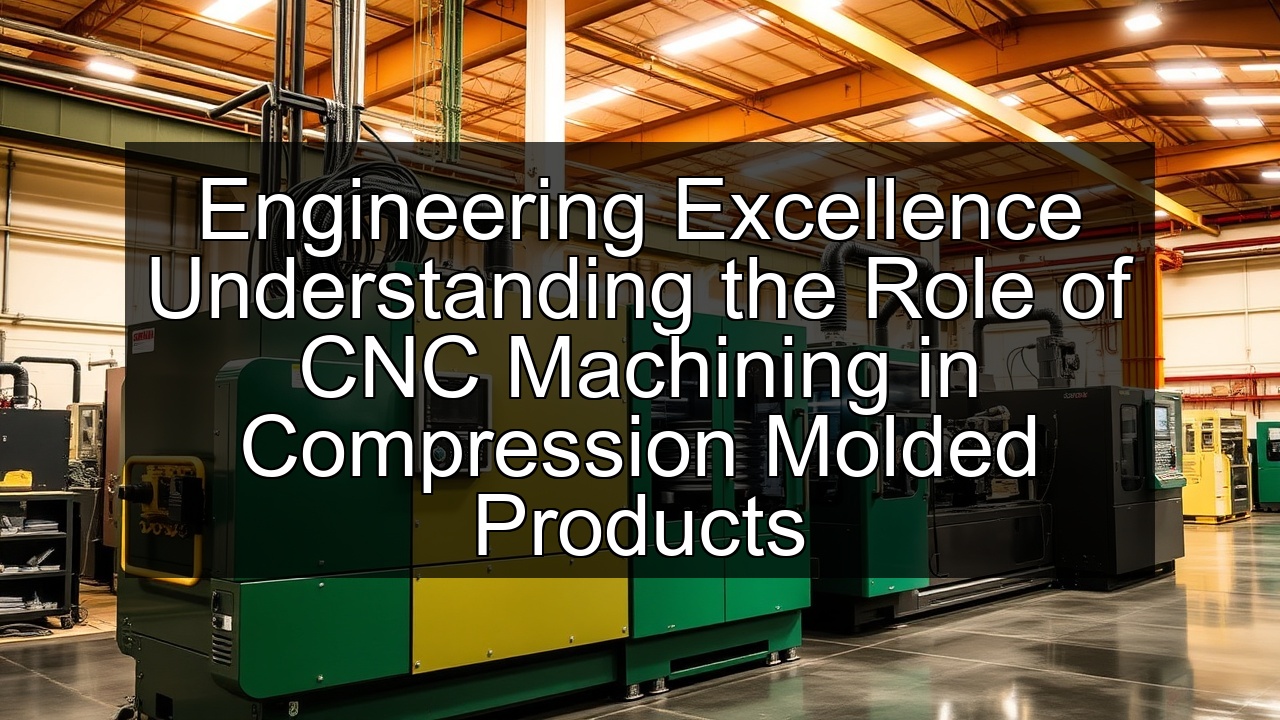
Engineering Excellence Understanding the Role of CNC Machining in Compression Molded Products
The Fundamentals of Compression Molding
Understanding Compression Molding Techniques
Compression molding stands as a pivotal manufacturing process, especially within industries requiring precise, durable components. This technique involves placing raw material—often in the form of pre-measured pellets—into a heated mold. Once the material is introduced, the mold closes, applying heat and pressure to shape the material. The result is a product that is not only high in quality but also consistent in its dimensions. This method suits both thermoplastic and thermoset materials, each offering distinct advantages. Thermosets, for instance, undergo chemical changes during the curing process, resulting in rigid and heat-resistant products. In contrast, thermoplastics can be remelted and reshaped, providing versatility across applications. Understanding these nuances is crucial for manufacturers seeking to optimize their compression molded services.
Materials Used in Compression Molding: Thermosets vs. Thermoplastics
Choosing the right material is vital in compression molding. Thermosets, such as urethane and epoxy resins, provide excellent thermal stability and resistance to deformation under heat. Their cross-linked structure enhances durability, making them ideal for high-performance applications. On the other hand, thermoplastics offer flexibility and ease of fabrication. Materials like polyethylene and polypropylene can be melted and reshaped multiple times, allowing for innovative designs and cost-effective production. Each material brings unique characteristics to the table, influencing factors like strength, weight, and processing speed. Manufacturers must weigh these properties carefully to select the best fit for their compression molded products.
Key Advantages of Compression Molded Products
Compression molded products offer numerous advantages that set them apart in the manufacturing landscape. One significant benefit is reduced waste; by utilizing precise measurements of raw materials, manufacturers can minimize excess material. Additionally, the process allows for complex shapes and intricate designs without compromising integrity. Compression molded items also exhibit superior strength and durability, making them suitable for applications requiring reliability under stress. Another advantage lies in the cost-effectiveness of production, especially when scaling for large orders. This combination of efficiency, strength, and design flexibility makes compression molding a preferred choice for many industries, solidifying its role in modern fabrication.
CNC Machining: Enhancing Precision in Manufacturing
The Role of CNC Machining in Fabrication
CNC machining serves as a cornerstone in the realm of precision manufacturing, particularly when paired with compression molding. This technology employs computer numerical control to guide machine tools, ensuring accuracy and repeatability in the machining process. Whether cutting, drilling, or milling, CNC machining transforms digital designs into tangible products with impeccable precision. By integrating CNC machining into the fabrication of compression molded products, manufacturers achieve enhanced dimensional accuracy, which is crucial for components that must fit together seamlessly. This precision reduces the need for rework and ensures that the final products meet stringent quality standards, embodying the essence of engineering excellence.
Tools and Technologies in CNC Machining
The landscape of CNC machining is rich with advanced tools and technologies designed to facilitate high-quality production. Key tools include lathes, mills, and routers, each tailored for specific tasks. Innovations such as multi-axis machining enable manufacturers to create complex geometries with precision. Additionally, the advent of 3D modeling software allows engineers to simulate machining processes before actual production, mitigating errors and streamlining workflows. These tools not only enhance efficiency but also expand the possibilities for design and innovation in compression molded products. Manufacturers can push the boundaries of what is achievable, leading to high-performance thermoplastic applications that meet evolving market demands.
Prototyping with CNC Machining: From Concept to Reality
Prototyping stands as a critical phase in product development, and CNC machining plays a vital role in this process. Engineers can quickly turn designs into physical prototypes, allowing for testing and validation before mass production. This rapid prototyping capability saves time and resources, enabling manufacturers to refine their designs based on real-world performance. With CNC machining, adjustments can be made swiftly, ensuring that the final compression molded products meet all specifications and quality benchmarks. This iterative approach fosters innovation and enhances product lifecycle management, allowing for continuous improvement and adaptation to market changes. The synergy between CNC machining and compression molding creates a powerful framework for developing cutting-edge products.
Applications of Compression Molded Products
Industries Benefiting from Compression Molded Services
Compression molded services find applications across a wide array of industries, showcasing their versatility and effectiveness. The automotive sector heavily relies on compression molded components for parts such as dashboards, bumpers, and interior trim, where durability and aesthetic appeal are paramount. Aerospace and defense industries also utilize these products for lightweight and high-strength components, ensuring safety and performance in critical applications. Additionally, the electrical industry benefits from compression molded enclosures and insulators, which provide excellent electrical properties. The medical field also embraces compression molded products for devices and components that require stringent safety standards and precise functionality. This broad applicability underscores the importance of compression molding in modern manufacturing.
Focus on Food and Beverage: Safety and Compliance
The food and beverage industry demands stringent safety and compliance standards, making compression molded products particularly valuable. Components such as seals, gaskets, and containers made from food-safe thermoplastics ensure that products maintain their integrity and safety throughout the supply chain. Manufacturers must adhere to regulations set by organizations like the FDA, ensuring that materials used in these applications are non-toxic and suitable for food contact. Compression molding provides the necessary precision and reliability in producing these critical components, helping brands maintain consumer trust while optimizing their production processes. The combination of quality assurance and efficient manufacturing makes compression molded products a go-to choice in this sector.
High-Performance Thermoplastic Applications
High-performance thermoplastics are revolutionizing numerous industries with their exceptional properties. These materials, utilized in compression molded products, offer superior strength, temperature resistance, and chemical stability. Applications range from advanced aerospace components to robust automotive parts that withstand extreme conditions. The ability to produce lightweight yet strong components through compression molding allows manufacturers to enhance fuel efficiency and performance in vehicles. Additionally, the versatility of high-performance thermoplastics enables the manufacturing of intricate designs that traditional materials may not support. As industries continue to evolve, the demand for innovative, high-performance solutions will drive the growth of compression molded products, positioning them at the forefront of technological advancements.
The Product Lifecycle and Future Innovations
Engineering Excellence in Compression Molded Designs
Engineering excellence governs the design and development of compression molded products, ensuring they meet both functional and aesthetic criteria. This involves thorough analysis and testing during the design phase, with a focus on optimizing material selection and processing techniques. Engineers strive to create products that are not only efficient to manufacture but also effective in their intended applications. Continuous improvement processes, including feedback loops from production to design, foster innovation and enhance product lifecycle management. This commitment to excellence drives the industry forward, resulting in products that consistently meet or exceed customer expectations, solidifying compression molding as a leader in manufacturing.
Sustainability in Compression Molding: Fiber and Composites
As sustainability becomes a global priority, the use of fiber and composites in compression molding reflects a commitment to environmentally friendly practices. Manufacturers increasingly incorporate natural fibers, such as hemp and flax, into their products, reducing reliance on traditional plastic materials. These composites not only minimize environmental impact but also offer enhanced mechanical properties, making them suitable for a wide range of applications. Additionally, the ability to recycle thermoplastics contributes to a circular economy, where materials can be reused and repurposed. This shift toward sustainable practices in compression molding not only benefits the environment but also appeals to consumers who prioritize eco-friendly products.
Emerging Trends: Overmolding and Liquid Silicone Rubber
Overmolding and liquid silicone rubber (LSR) technologies are emerging as significant trends in the compression molding landscape. Overmolding allows manufacturers to combine multiple materials into a single product, enhancing functionality and user experience. This technique is particularly valuable in applications requiring soft-touch grips on hard components, providing a seamless integration of materials. Liquid silicone rubber, known for its biocompatibility and flexibility, is gaining traction in industries ranging from medical devices to consumer products. These innovations not only expand the capabilities of compression molded products but also present opportunities for engineers to develop unique solutions that meet complex market demands. As these trends continue to evolve, they will shape the future of compression molded services, driving further innovation and excellence in manufacturing.
See Also
- The Evolution of Compression Molded Products in Modern Engineering
- Sustainable Practices in Compression Molding for the Eco-Conscious Manufacturer
- The Future of Food and Beverage Packaging through Compression Molding Techniques
- Challenges and Solutions in Compression Molding for Complex Designs
- A Deep Dive into Compression Molding Services for Custom Solutions